Support services
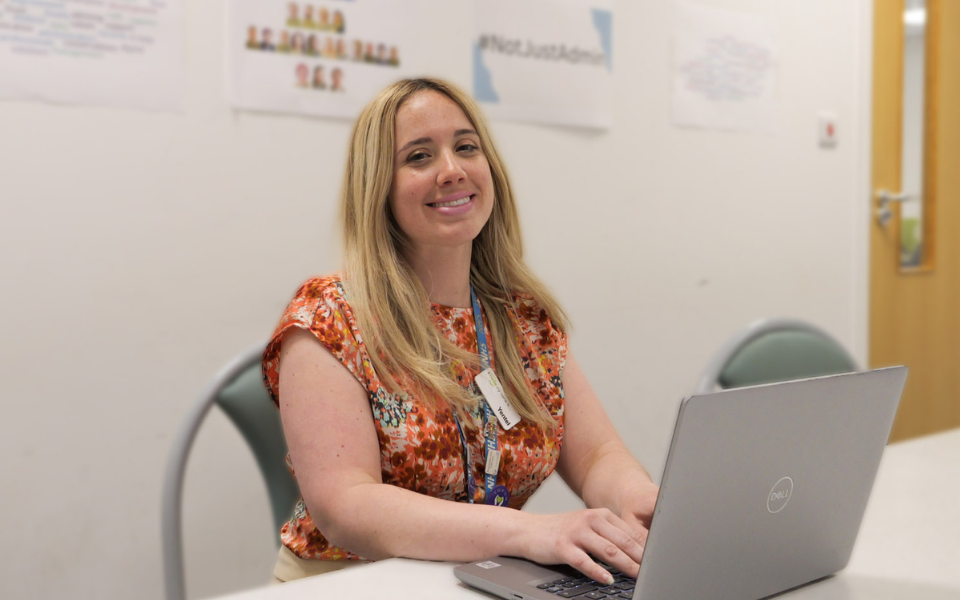
From Sports Coach to NHS Innovator: How Yentel Found Purpose at UHS
Before joining the NHS, Yentel worked at a wellbeing centre and coached children with disabilities. Those early roles taught her empathy, communication and leadership, the same skills she now brings to patient care and discharge planning.
“From a young age, I was always drawn to helping others,” she says, reflecting on her upbringing. “My parents set the example through volunteering in different facets and always encouraged that mindset. It’s a value I’ve carried into adulthood—supporting people to improve their quality of life, taking part in humanitarian and relief work, and engaging in hands-on building and labouring projects both locally and internationally, all to give back in the same spirit.”
After studying healthcare science, Yentel began working as a business assistant, where she honed organisational and time management skills. But it was her parallel role as a sports coach that truly unlocked her strengths, collaboration, adaptability, and the ability to engage with people on their level. “I learned how to communicate with different types of people, how to motivate and support them. That experience gave me a strong foundation, even before I stepped into healthcare.”
Stepping into the NHS, From Paper Notes to Digital Solutions
Yentel’s first role at University Hospital Southampton was in outpatient administration, preparing paper-based clinical records. New to the UK, she saw it as a valuable introduction to the NHS, learning how departments functioned, what challenges they faced, and what made operations run smoothly.
Just two months in, Yentel found herself helping lead a major digital transformation, switching paper files to electronic records. While others found it daunting, she saw it as a chance to support and shape change.
“Suddenly, I was involved in this huge project. I didn’t expect it, but it pushed me to think critically and find ways to support my colleagues through the transition,” she recalls. “That experience shaped the way I see digital change in healthcare, as it was not just about technology, but about people. You can’t just tell someone to adapt; you have to bring them with you.”
Her advocacy for digital tools and natural ability to bridge gaps between systems and people marked the start of her journey toward a more strategic role. “It gave me the confidence to suggest solutions and champion new ways of working,”.
Making a Role Her Own
Seven years after joining the Trust, Yentel now works as a Business Services Coordinator in the Complex Discharge Team, a position that didn’t exist until she stepped into it. “I’m the first person to do this role, so I’ve been able to shape it,” she says. “That’s what I love about it, it’s constantly evolving.”
Her job is fast-paced, and her day-to-day responsibilities vary. Some days include producing data reports, analysing performance metrics, managing onward care referrals, and other days involve overseeing team training and HR functions. “No two days are the same. I could be creating a quarterly performance report one day and designing an induction programme the next.”
She thrives on that unpredictability, but it’s the meaning behind the work that drives her. “I know the work I do behind the scenes helps patients get home safely and supports my team to do their best. That’s what makes it fulfilling.”
Creating Space for Others to Grow
Yentel’s commitment to development doesn’t stop at her own progress. She actively fosters a supportive, empowering environment for her team.
“I’ve always believed in open communication and active listening, really hearing what people are saying, not just thinking about what you’re going to say next,” she reflects. Her leadership style is based on coaching and trust. “It’s about helping people feel safe and feel valued”.
And the feedback speaks for itself. Her team members say they feel listened to and supported, and many credit her for creating a calm, stable atmosphere even under pressure. “Someone once told me I made them feel like they could do more than they believed they could. That meant a lot to me.” Believing your actions are the best way to help build trust, “It’s about showing people that they’re supported, not just saying it.”
Innovation with Purpose: Redefining Induction
One of Yentel’s proudest achievements is the creation of a fully digital induction programme for her department, something that has gained recognition across the Trust. Frustrated by outdated, paper-heavy onboarding materials, she decided to rebuild the process from scratch.
“People were handed thick packs of paper that no one really read,” she explains. “It didn’t reflect who we are or prepare new starters for what we do.”
She used Canva to design an interactive induction pack, with videos from each of the eight teams, key links, and a clear overview of the department. This provided new starters with a more personal induction. “I wanted new starters to feel part of something from day one. It’s about building belonging early on.”
The response was overwhelmingly positive. Her work was showcased across the Trust and is now seen as a model for onboarding. This is a massive achievement and benefit that not only supports her teams but also the wider UHS Community.
Balancing Passion and Profession
Yentel has over 10 years of experience in education and public speaking, and outside her NHS role she runs her own teaching and lecturing business. “My teaching business operates alongside my NHS career, allowing me to pursue my passion for education without interfering with the demands of my NHS role,” she explains.
Running her own business and working in healthcare might seem worlds apart, but for Yentel, they enhance each other. The skills gained are transferable, including time management, communication, and a passion for helping others learn and grow.
When applying for her current role, she was upfront about her other commitments and received full support. “That kind of flexibility isn’t always a given, and it’s one of the reasons I love working here.”
Advice to Her Younger Self and Anyone Starting Out
If she could go back and give her younger self advice, Yentel says she’d remind herself to trust her instincts. “Believe in yourself. You can do anything you put your mind to. Don’t wait for someone to hand you a path, create your own.”
Her journey into the NHS may not have followed a traditional route, but it’s a powerful reminder that careers are not always linear, and that transferable skills, curiosity, and compassion go a long way. “You don’t need a clinical background to make an impact. My experience came from business and coaching, and it’s been just as valuable,” she says. “What matters is that you care, and you’re open to learning.”
“I love learning, which is why I continually engage in both formal and informal self-development—through weekly public speaking, dedicated reading, and ongoing study. Prioritising this as early as possible in your career is incredibly valuable,” she explains, reflecting on the data analytics and project management courses she has completed.
Looking back, it’s clear that every role Yentel held, no matter how different, played a part in preparing her for the career she has today. Whether she was guiding children on the sports field or supporting teams through digital transformation, she was always focused on people, growth, and making a difference.
Yentel’s story shows that careers in healthcare don’t have to follow a straight line. She’s blended coaching, digital innovation and people-first leadership into a role that fits her, while supporting others to grow. Her advice? “Believe in yourself, create your own path.”
If you’re wondering whether your skills could belong in the NHS, the answer might just be yes. Click here to explore how your own journey could start at UHS.
Related Blogs
The People Behind the Bypass: Helen on Perfusion, Pressure and Career Progression
More
From Ward Life to Hidden Science: How Amelia Found Her Place Behind the Scenes
More
Building a Career in Cancer Research at UHS – Dr Jemma Longley’s Story
More