Allied health | Career Development and Education
Supporting Newly Qualified Professionals: The Impact of Preceptorship at UHS – Goda’s Story
Starting your first role as a newly qualified healthcare professional is exciting, but it can also feel daunting. The transition from university to clinical practice is one of the steepest learning curves in any career, and at University Hospital Southampton (UHS), we believe no one should face it alone. That’s why our Preceptorship Programme exists: to provide structured support, mentorship, and a safe space for growth during this critical first year.
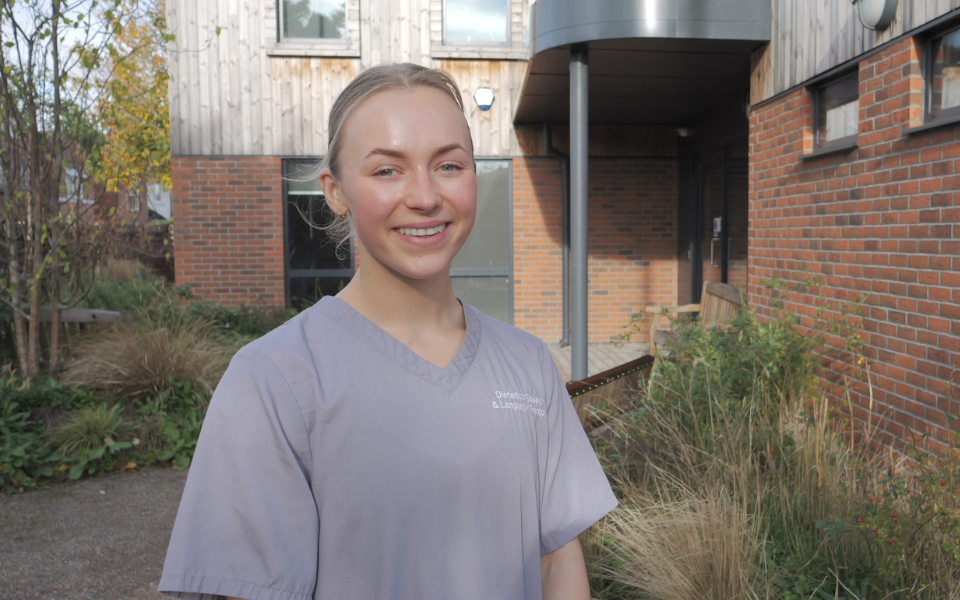
For Goda, stepping into a highly specialised role as a Head and Neck Cancer Dietitian could have been overwhelming. Instead, with the guidance of her preceptor and the wider team, she built confidence, developed autonomy, and discovered the power of peer support.
In this blog interview, Goda shares her journey, from the challenges of starting out to the lessons that shaped her professional identity and why preceptorship is essential for every newly qualified healthcare professional.
Can you tell us a little about your role and what inspired you to become a Dietitian?
I am a specialist Head and Neck Cancer Dietitian. This means I have the responsibility of supporting patients with their nutrition before, during, and after their treatments, which can include complex surgery, chemotherapy, and radiotherapy. Each of these treatment options comes with its own significant nutritional risks, often affecting a patient's ability to eat, swallow and maintain their weight. Our work is crucial because optimising a patient's nutrition throughout their treatment journey is related to their treatment outcomes and, ultimately, their subsequent quality of life.
I was inspired to apply for this role after my student placement experience within the head and neck team at Surrey Hospital; I saw first-hand the profound, positive difference dietetic intervention could make for these patients, and I knew immediately that I wanted to be a part of that change.
What was your experience like as a newly qualified professional starting at UHS?
My experience as a newly qualified professional at UHS was positive, primarily because I was fortunate enough to start in an area, I was genuinely interested in. Although I was entering a high level of specialism, my preceptor (who also served as my direct supervisor) did a fantastic job of creating a structured and supportive introduction. This included scheduled time with the wider oncology dietetic team and the multidisciplinary team, which was key to understanding the service. I was also actively supported to attend continued professional development sessions to broaden my general dietetic knowledge beyond oncology, which significantly developed both my competence and confidence in the role and was crucial when I needed to provide support in other areas of the department. Having a structured induction worked incredibly well with my learning style, and the regular check-in meetings with my preceptor ensured I could always share any specific learning I was keen to pursue.
What were your initial thoughts and expectations when starting your preceptorship year?
I did not have any thoughts or expectations about the preceptorship programme as it was quite new. I did not know much about the formal process and was the first to undergo this process within the head and neck team. As a team, we recognised this and made a mutual agreement to embark on this journey together. It became a collaborative learning experience where we explored the structure and benefits of preceptorship along the way.
How did the preceptorship programme support you during your transition into professional practice?
The formal programme was invaluable in providing a foundational understanding of the hospital, including its complex ways of working and available resources, which is vital in a large organisation. Beyond the practicalities, it offered a safe space to reflect on my thoughts and feelings with other Allied Health Professionals. It was incredibly insightful to hear that so many of us felt the same anxieties, fears, and moments of triumph despite being in different professions. This networking also allowed me to make great connections with other preceptees who support me in the management on my patient caseload on the wards.
What aspects of the programme helped you grow in confidence and develop as an autonomous professional?
The most helpful aspect was having regular meetings with my preceptor and supervisor. This dedicated time created a protected space for reflection and guidance. I genuinely felt that my preceptor was invested in my journey of development; they did not just supervise my caseload, they actively coached me on professional behaviours, clinical reasoning, and managing complex emotional situations. This support allowed me to take on more responsibility and make autonomous decisions and with time, become a confident and competent clinical.
Can you share a standout moment or key learning experience from your preceptorship year?
My most impactful learning moment came from a shared experience by a nurse with years of clinical experience. She recounted a time when a patient had received devastating news, and she simply did not have an answer to their distress. Instead, she just held their hand and apologised for what they were going through.
As a Head and Neck Dietitian, I often attend meetings where patients receive bad news about their cancer prognosis or treatment side effects. I have taken her example to heart. It taught me that sometimes, the 'right thing to do' or 'right thing to say' is not a textbook answer but simply the act of showing empathy and compassion. It's a key communication lesson I use within my role.
How did your preceptor support you, and what impact did that relationship have on your journey?
My preceptor was exceptional because they opened all forms of communication. I knew that they were only an online message away, which was profoundly reassuring when I was dealing with a tricky situation. The relationship had a monumental impact on my journey; their support wasn't just about clinical training, but also emotional and professional. They fostered an environment of trust and psychological safety that allowed me to be vulnerable, ask 'silly' questions, and feel confident pushing my own boundaries, making the transition from student to specialist much smoother.
How has your own experience shaped the way you now support newly qualified staff? Are you planning to become a preceptor?
My experience as a preceptee shaped how I now approach supporting new colleagues. I remember how stressful it can be to be new in any setting, let alone a specialised clinical one, and if I can make that transition a little less stressful for someone, it would be my genuine pleasure. I've recently taken steps to apply this approach by becoming a buddy to a new colleague. I make sure to prioritise our informal 'coffee catchups,' focusing on the holistic experience of being a new member of the team, not just the clinical workload. I would welcome the opportunity to become a formal preceptor, as I truly believe in paying the support forward.
In your view, why is preceptorship so vital for newly qualified healthcare professionals?
Preceptorship is vital because the transition from being a student to a fully autonomous, responsible professional is one of the steepest learning curves in any healthcare career. It provides a structured, supervised, and supported bridge between the academic world and the reality of clinical practice. It's not just about teaching clinical skills; it's about developing professional confidence, clinical reasoning, resilience, and the ability to manage complex ethical and emotional situations.
What advice would you give to someone starting their preceptorship?
There is no expectation for you to know everything on day one. Your preceptorship year is a time for growth, not perfection. Be brave and ask for help and clarification, your preceptor wants you to succeed. Get to know your fellow preceptees; they are your most valuable peer support network. Finally, be kind to yourself. You are making the leap from learning to leading, and that process takes time, effort, and lots of self-compassion.
Preceptorship doesn’t just create competent clinicians; it creates a community of support that lasts well beyond the first year. Goda’s experience highlights the value of connection, reflection, and mentorship in shaping confident healthcare professionals.
Ready to begin your career with confidence? Click here to see what UHS has to offer.
Related Blogs
The People Behind the Bypass: Helen on Perfusion, Pressure and Career Progression
More
From Ward Life to Hidden Science: How Amelia Found Her Place Behind the Scenes
More
Building a Career in Cancer Research at UHS – Dr Jemma Longley’s Story
More